One bridge left
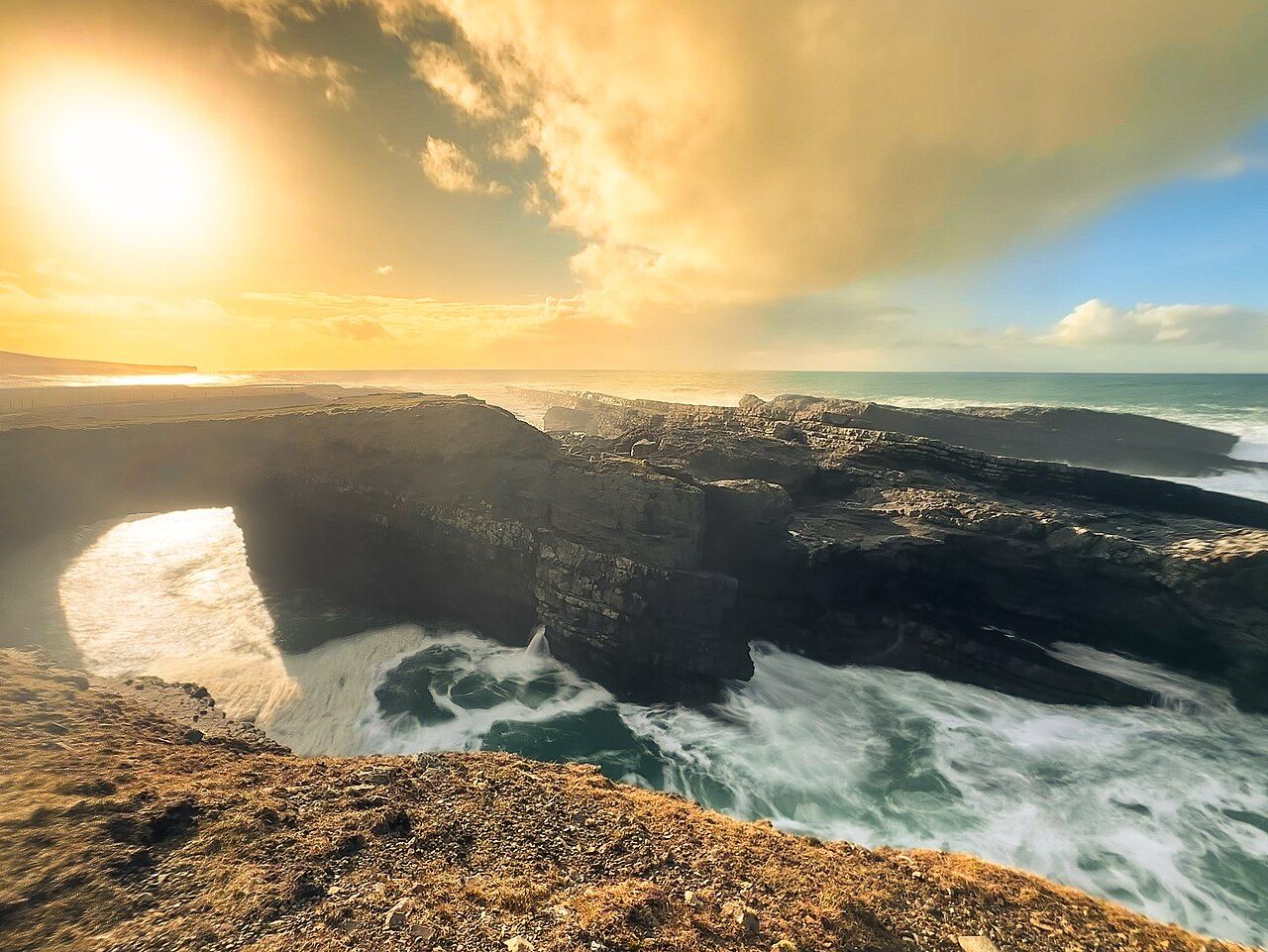
The Bridges of Ross are on the north shore of the Loop Head Peninsula, near the western tip. The name is plural, but only one bridge remains. There were once three natural arches here, carved by the sea out of the layered rock, and two have fallen into the water over the years. The survivor is a broad, low span of rock with the sea surging in beneath it, and it is a good reminder of how fast this coast can change.
The arch is reached from a small parking area at the end of a side road off the R487, followed by a short walk over rough grass and rock. It is about 20 km from Kilkee and only a few kilometres from the lighthouse at Loop Head, so most riders call in on the way out to the tip or on the way home.
There is nothing built here: no visitor centre, no railings, no shelter. That is a large part of the appeal, and it is also the reason to take care.
The rock
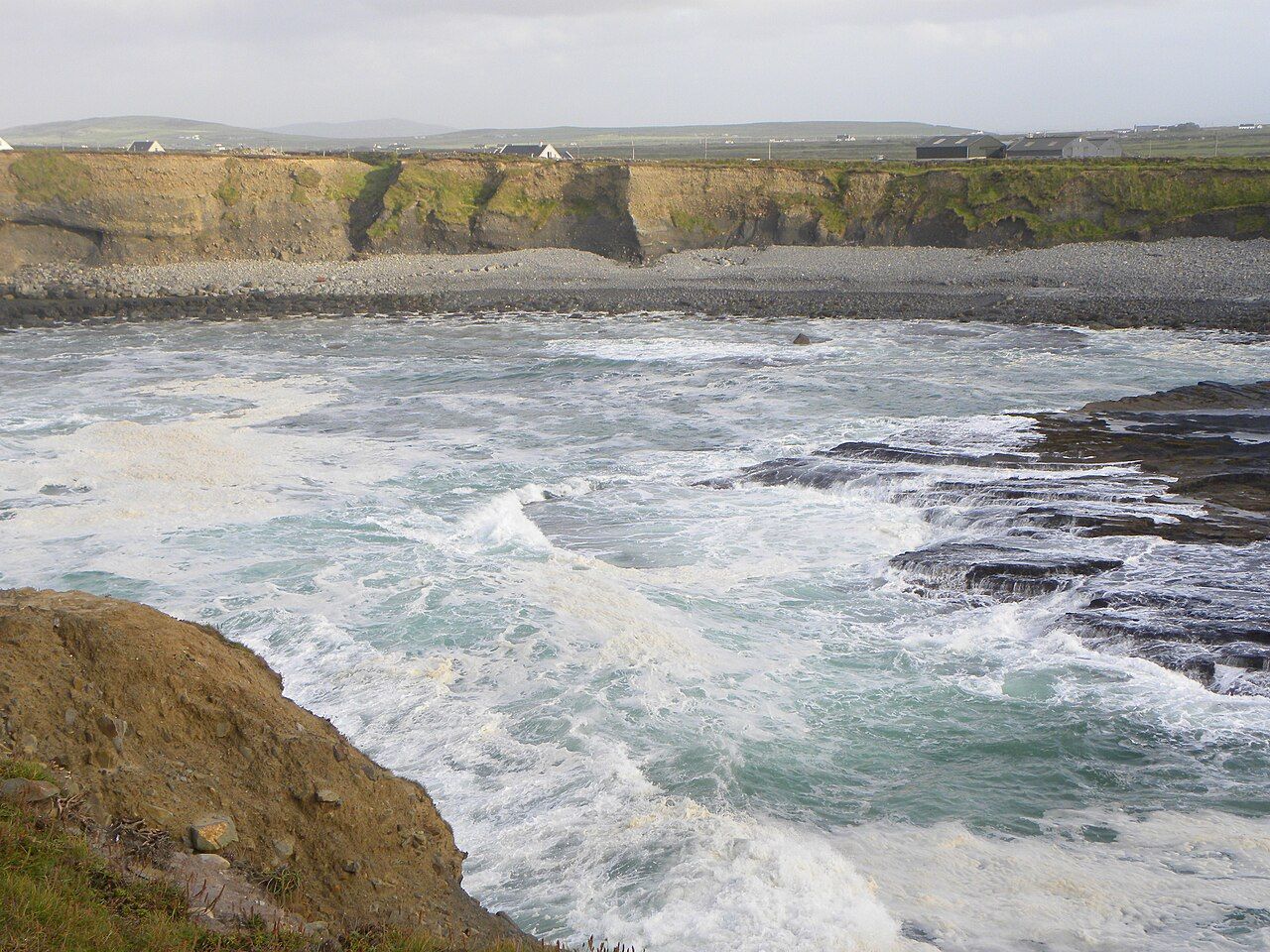
The coast at Ross is made of thin beds of sandstone and darker shale, laid down in water hundreds of millions of years ago and later tilted and folded. The sea works its way into the weaker layers, opens caves, and eventually punches through a headland to leave an arch. When the arch roof grows too thin, it falls, and what is left is a stack or a gap.
Look closely at the flat slabs near the arch and you may see ripples in the rock, the marks of ancient currents set in stone. The folds in the cliffs on either side are easy to follow, and in low evening light the layers stand out like the pages of a closed book.
The rock is also very slippery. Wet slabs, a skin of weed close to the water and loose fragments on the ledges make every step count.
Seabirds in autumn
For most of the year the Bridges of Ross are a quiet spot for a short walk. In late summer and autumn they become something else. When strong winds blow from the north-west, seabirds that normally pass far out in the Atlantic are pushed in towards the coast, and this north-facing shore of the peninsula is one of the places where they come close to land.
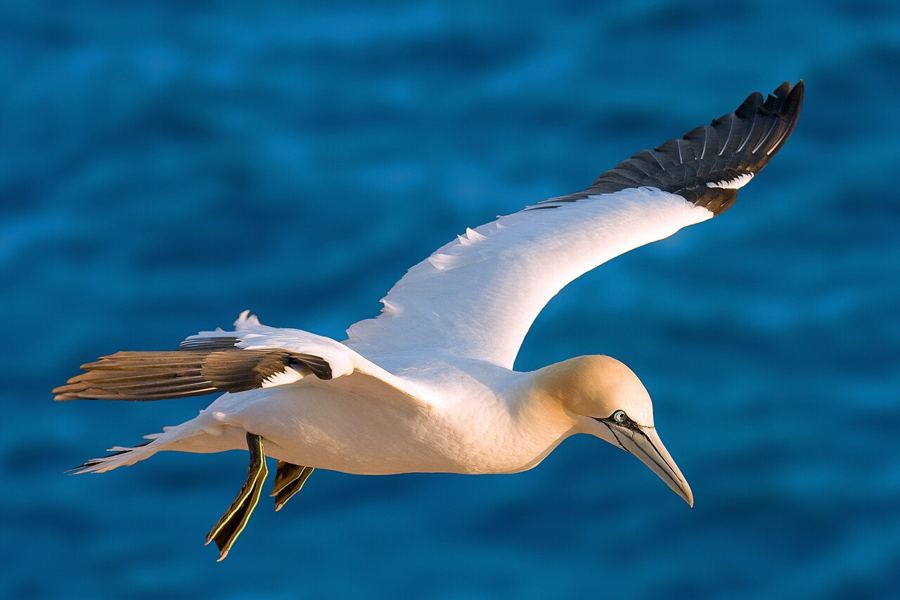
The site is widely regarded as one of the best places in Ireland to watch seabirds from land. On a good day birdwatchers line the higher ground with telescopes and count shearwaters, skuas, petrels and gulls as they stream past. Leach's storm petrels, small dark birds that dance low over the waves, are among the species people come hoping to see. Even if you know nothing about birds, the sight of gannets and shearwaters working along the waves in a gale is worth stopping for.
 Next stretch of coastSeabirds, seals and the sea
If you want to try it, bring binoculars, find a spot well back from the edge, and give the people with telescopes a little room. Seawatching is mostly patience: long minutes of grey water, then a sudden rush of birds.
Watching the sea safely
The same winds that bring the birds bring the sea. A north-westerly gale drives heavy swell straight onto this shore, and waves can break far higher up the rocks than you would expect. Every so often a much bigger wave arrives among the ordinary ones, and on wet, sloping rock there is no time to get out of its way.
- Do not walk or stand on the arch itself, in any weather.
- Stay on the grass or higher rock, well back from the water and the edge.
- Keep children close and dogs on a lead.
- If spray is reaching where you are standing, move further back.
- Never turn your back on the sea while you are near the water.
On calm summer days it is tempting to scramble down to the lower ledges. Even then, the rock is greasy near the water and help is a long way off.
The R487 west from Kilkee
From Kilkee follow the R487 west towards Loop Head. Beyond Cross, look for the signed turn on the right for the Bridges of Ross, and follow the narrow road down towards the shore. The road is quiet but it is single track in places, so keep left and be ready to pull in.
The ride out is rolling and very exposed, with little shelter from the wind. The arch fits easily into a day that takes in Cross and the west end, the lighthouse and the estuary road home. Leave the bike at the parking area, lock it to itself if there is nothing else, and walk the last stretch.
Seabird weather
For the birds, go from August into October, ideally on a day with a strong north-westerly wind, and be ready to stand still in the cold for a while. For the arch and the rocks, a calm, clear day in late spring or summer is kinder, with light on the layered cliffs and sea pinks in flower on the turf. In winter the place is wild and magnificent from a distance, and no place to go near the water.
The road home will usually be into the wind, and the hill out of the shore is a little longer than it looks on the way down.
Pictures here: Andreas Trepte, cc-by-sa