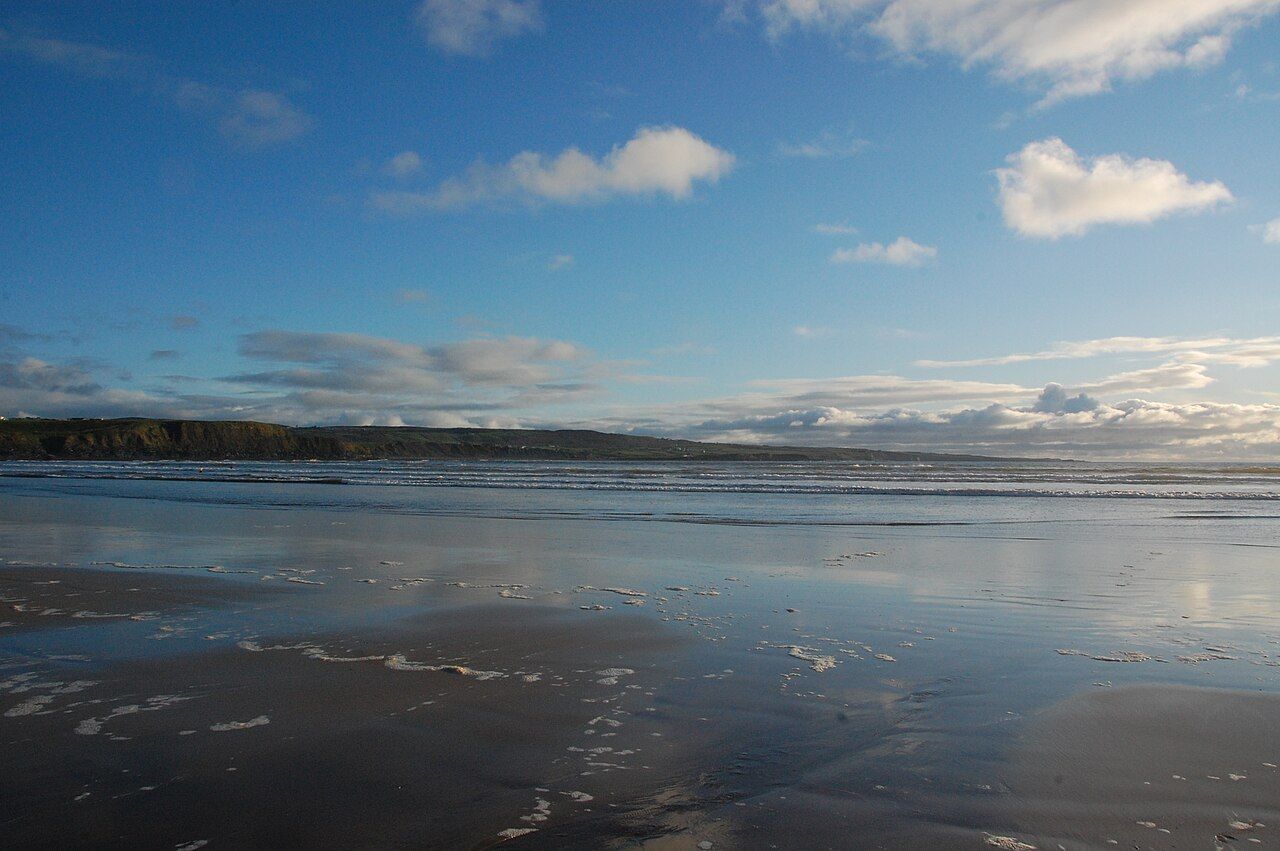
Lahinch sits at the back of Liscannor Bay, where a long beach of firm sand meets a short promenade and a town of a few streets. It has been a seaside resort for well over a century, and for the last few decades it has also been one of the best-known surf towns in Ireland. Ride in on a fine day and you will see boards on car roofs, wetsuits drying on railings and lines of swell rolling in across the bay.
The beach and the bay
The beach runs north from the promenade, wide and gently shelving, backed by dunes and the golf links. At low tide it seems to go on for ever; at high tide the sea comes right up to the rocks below the sea wall. The Inagh river reaches the sea at the northern end of the bay, having come down through Ennistymon a few kilometres inland.
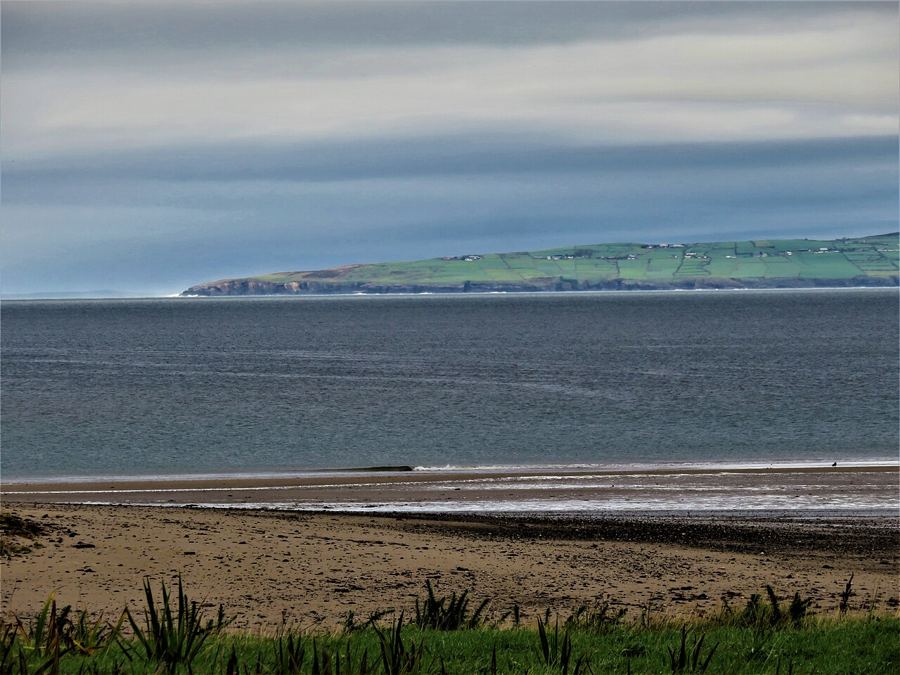
Across the water, the far side of Liscannor Bay rises towards the village of Liscannor and the high ground beyond. Further on are the Cliffs of Moher, which most visitors to this coast go to see. This guide leaves them to others; from Lahinch, it is enough to look across the bay at the headlands and watch the light change on them.
The bay is shallow and sandy, and at the lowest tides the beach seems to join the river mouth in one wide sheet of wet sand and channels. It is a fine place to walk, but the river channels fill fast as the tide turns, so keep an eye on the water if you head north along the strand.
The surf
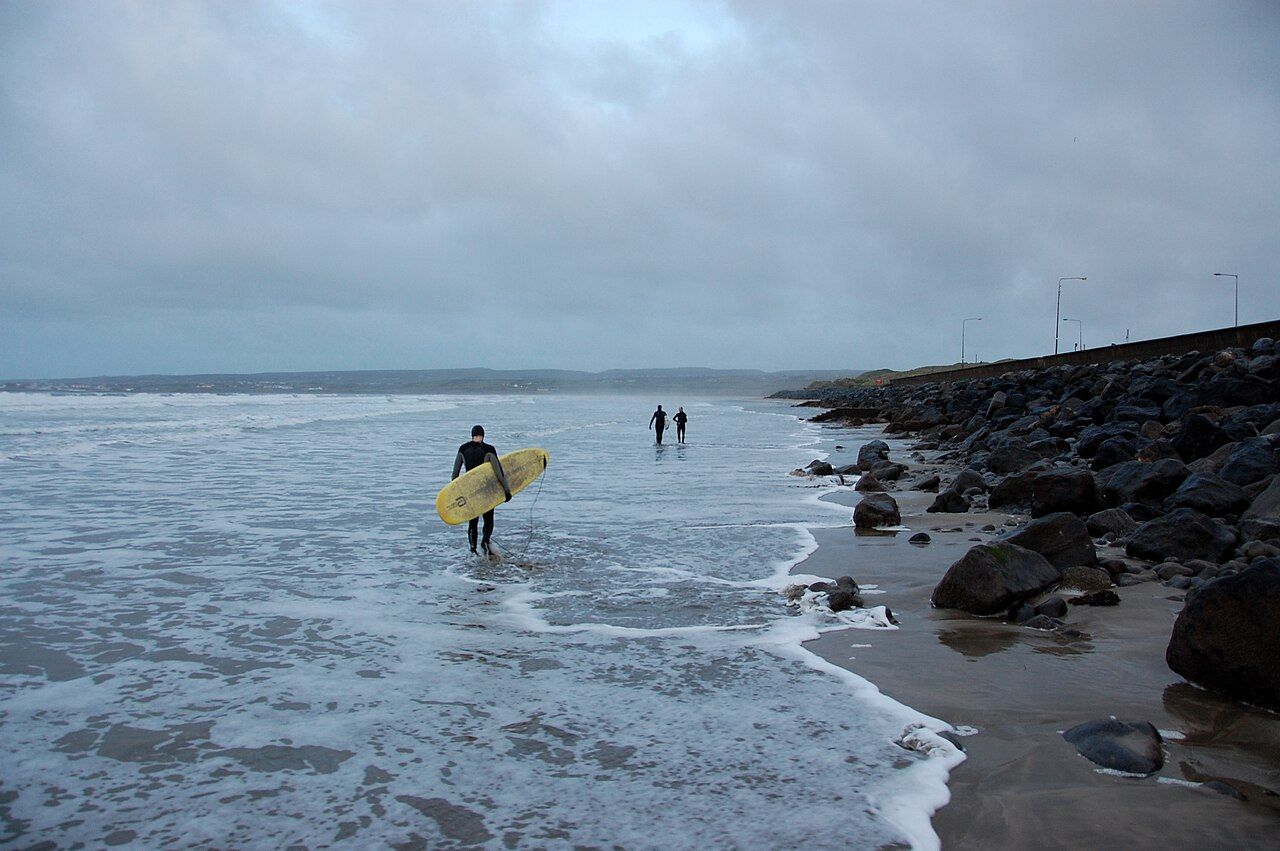
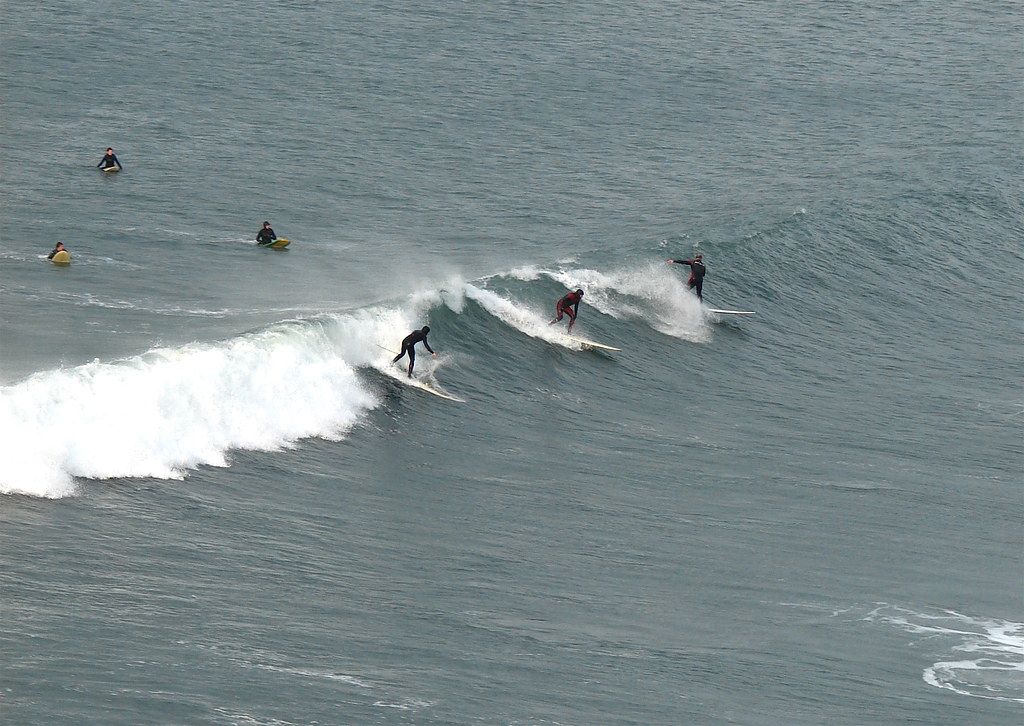
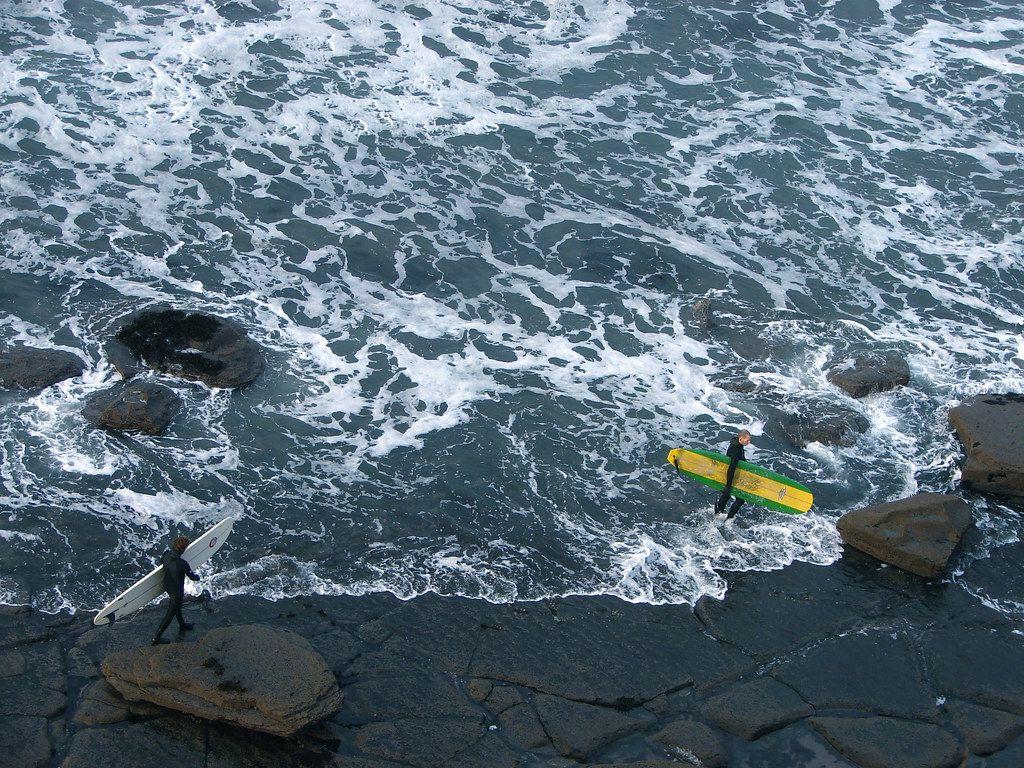
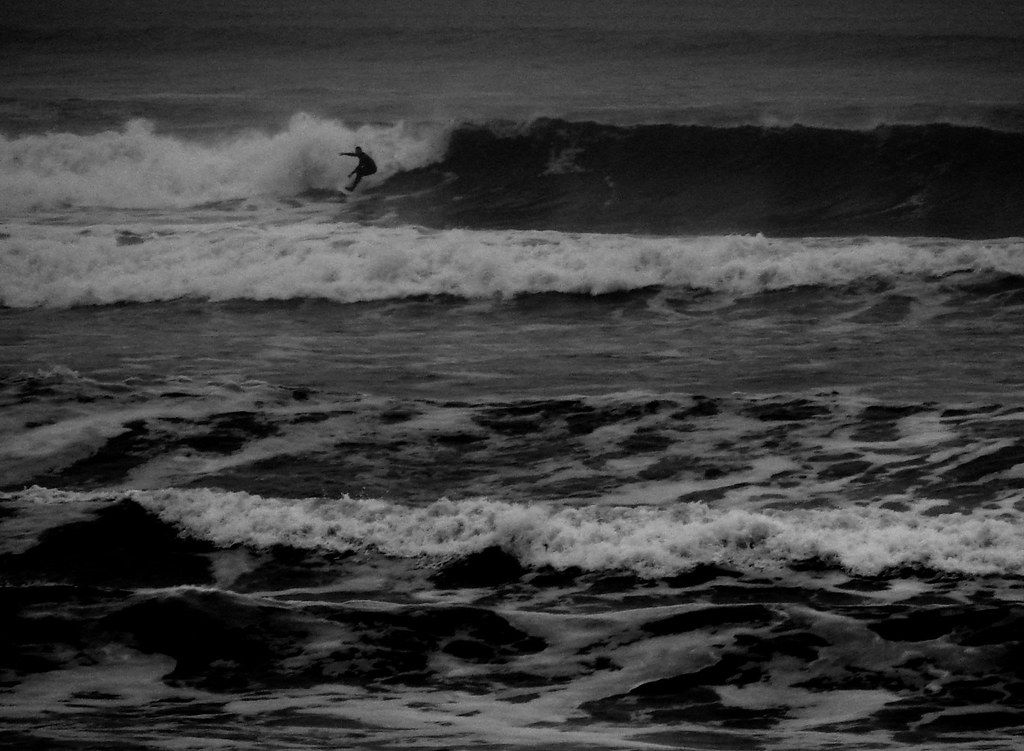
Lahinch faces west into the Atlantic, and the bay picks up swell through most of the year. The main beach break suits learners on smaller days, while the reefs and points around the bay are for experienced surfers only.
You will see people in the water in every season. Winter brings the most powerful swell and the coldest water; summer brings smaller waves, longer days and far more people.
Lessons in general
Several surf schools work from the town, mostly from spring to autumn. If you have never surfed, a lesson with a qualified instructor is the safe way to start: they provide boards and wetsuits, choose the right part of the beach for the conditions, and know how the currents behave.
- Expect to spend most of a first lesson in shallow water, learning to stand up in broken waves.
- A thick wetsuit, boots and often gloves and a hood are normal outside high summer.
- Rip currents form along the beach, especially near rocks and the river mouth. Stay where your instructor tells you.
The promenade and the town
The promenade is short, but on a fine evening it is the place to be. People walk the sea wall, sit on the steps and watch the surfers. In a storm it takes the full force of the sea, and waves can break over the wall. On those days, watch from well back.
 Next stretch of coastWind, weather and the Atlantic
The town itself is small and busy in summer, with traffic, parking and people on foot all sharing narrow streets. Behind the front, a few streets climb gently inland. There are places to eat, to buy supplies and to get out of the rain, and their hours are shorter out of season.
Riding in and out
From the south, the N67 brings you in from Miltown Malbay, about 13 km away, over rolling ground with views of the sea. It is the main coast road and carries steady traffic in summer, including camper vans and coaches. The inland roads are quieter but hillier.
From Ennistymon, it is a short ride of about 4 km down the river valley, mostly downhill on the way in and uphill on the way out.
North of Lahinch the road climbs out of town and runs around the bay towards Liscannor and on to the cliffs. This is one of the busiest stretches on the whole coast in summer, with coaches, cars and people stopping wherever there is a view. If you ride it, go early or late in the day, keep left, and pull in to let traffic pass where you can. The notes on riding the Wild Atlantic Way cover this in more detail.
Where to leave your bike
The front is exposed. Sand blows across it in any breeze, and spray reaches surprisingly far. Lock your bike somewhere sheltered, away from the sea wall, and give the chain a wipe and a drop of oil at the end of the day.
When to come
Summer is lively and busy. Spring and autumn are calmer on land, often better in the water, and the light on the bay is lovely. Winter is for keen surfers and storm watchers; wrap up.
If you are staying a few days, a morning on the beach, an afternoon ride inland and an evening on the promenade make a good rhythm. On the windiest days, leave the bike locked up and walk the strand instead; the wind that makes riding hard is what brings the surf.
Whatever the season, Lahinch makes a good turning point on a coast ride: a place to stop, eat, watch the sea, and decide whether to head inland towards Ennistymon or back down the coast with the wind behind you.
Pictures here: Maoileann, cc-by-sa