The quiet middle of the peninsula
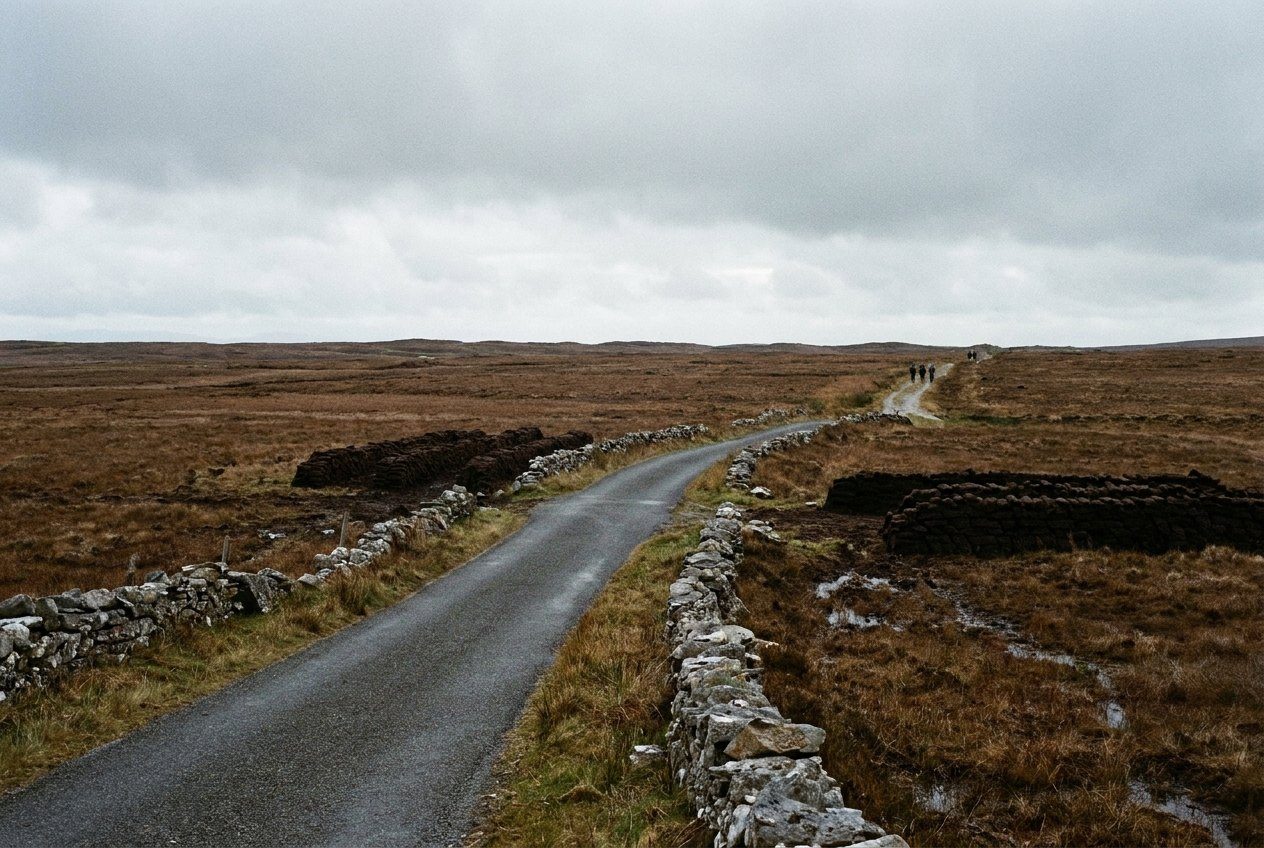
Most people see the Loop Head Peninsula from its edges: the cliffs, the beaches, the lighthouse at the tip. The middle is a different place. Between the Atlantic shore and the estuary, a web of narrow roads runs across low ground, small fields, rough grazing and patches of bog. There are few houses, fewer cars and a great deal of open sky.
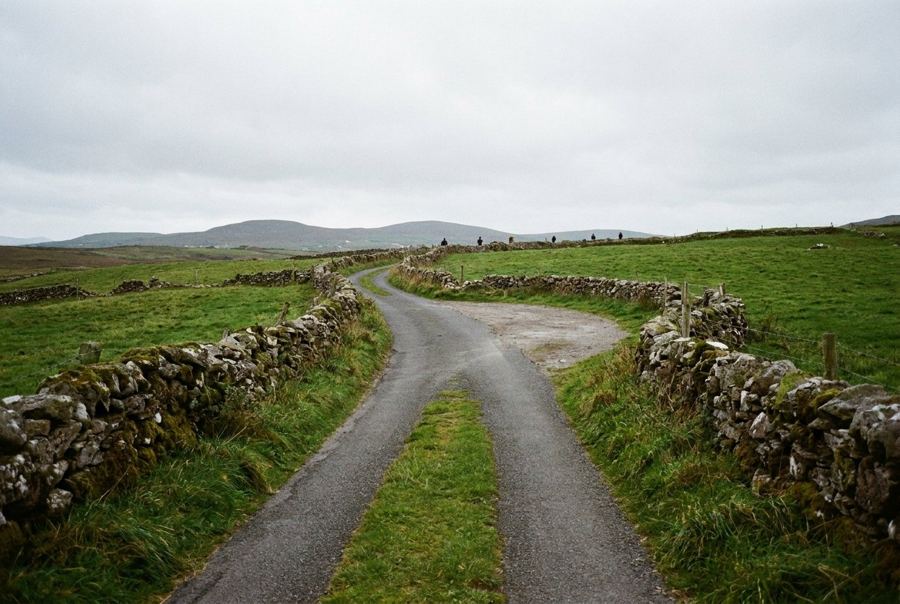
These are the bog roads. Many began as tracks to the turf banks or between farms, and they still feel that way. Some are surfaced and smooth, some have a stripe of grass down the middle, and a few fade into gravel and puddles. They rarely go anywhere in a straight line, and that is the point.
For a rider tired of the main road and its summer traffic, they are a gift. You can cross from Kilkee to Carrigaholt or wander west towards Cross and hardly meet a car.
The land itself
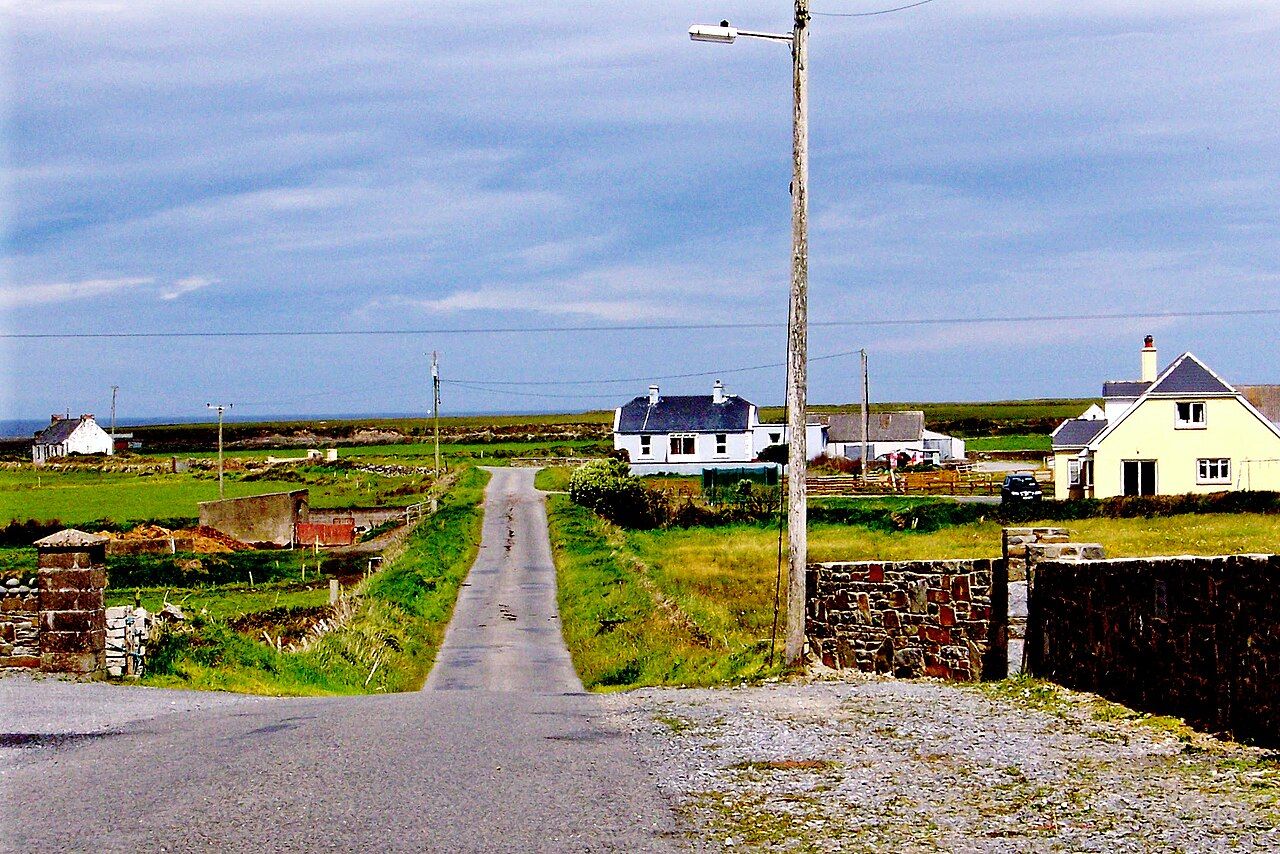
The interior of the peninsula is low and gently rolling, with the land seldom rising far above the sea. Much of it is wet ground, where rushes grow thick in the fields and water lies in the hollows after rain. In places there is true bog, built up over thousands of years from mosses and plants that never fully rotted in the waterlogged ground.
Bog looks plain at first glance, brown and level, but it rewards a closer look. In summer it is full of colour: the white tufts of bog cotton, purple heather, yellow bog asphodel, and the small red leaves of sundews, which catch insects. Skylarks sing high overhead, and you may see a hen harrier or a kestrel hunting low over the rough ground.
The fields around the bog are bounded by stone walls and earth banks, many of them very old, built from stones cleared out of the land by hand. Some walls are neat and tight, others half buried in grass and gorse, and they give the inland roads their pattern.
Turf, then and now
For generations, turf was the fuel of west Clare. Families had the right to cut turf from their own bank on the bog, and the work of cutting, spreading, footing and drawing it home filled weeks of each summer. The cut sods were stood in small stacks to dry in the wind, and the smell of a turf fire is still part of the memory of the place for many people.
Today the picture is mixed. Some people still cut turf for their own fires, by hand or with machines, while many bogs across Ireland are now protected for their wildlife and the carbon they store, and the rules on cutting have changed. It is a subject that matters deeply to the people who live with it, and it is best approached with interest rather than opinion.
 Next stretch of coastRiding safely on Irish country roads
If you see turf drying beside the road, admire it from the lane. The banks, stacks and bog are private, the ground can be soft and deep, and old cuttings fill with water that looks shallower than it is.
How to ride them
The bog roads are not fast, and they are not meant to be. Expect broken edges, potholes, loose gravel and soft verges that drop away into ditches. After rain the low points flood, and a puddle across the whole road can hide a deep hole. Grass down the middle of the lane can be slippery when wet, so pick a line and keep to it.
- Use wider tyres if you can, and carry a spare tube, a pump and tyre levers.
- Bring a map or a downloaded route; signposts are few, and junctions look alike.
- Pull right in for tractors and farm vehicles, which use every inch of the road.
- Close any gate you open, and do not block field entrances.
- Watch for cattle and sheep on the road, and slow right down when you meet them.
The roads are mostly flat, but the wind on open bog is something else. With nothing to break it, a crosswind can push you towards the verge, and a headwind can make 10 km feel like twenty.
A loose route
There is no single bog route to follow. A good way to start is to ride south from Kilkee on the road towards Carrigaholt, then turn off onto the smaller lanes heading west, keeping the estuary on your left. Work your way towards Cross and the west end, then return to Kilkee along the main road or on another set of lanes. In all, a wandering loop of about 25 km is easy to put together.
Do not worry about getting a little lost. The peninsula is narrow, and sooner or later every lane meets the sea or a road you know.
When to go
Summer is the best time on the bog roads. The ground is drier, the wildflowers are out and the evenings are long. Late spring is good too, with lambs in the fields and birds singing. Autumn turns the bog to rust and gold, but the lanes get muddier as the rain returns. In winter many low roads lie under water for days at a time, and the open ground is cold and raw.
Whenever you come, take it slowly. The bog roads are where the peninsula is quietest, and the best thing they offer is the chance to hear nothing but wind, birds and your own wheels.