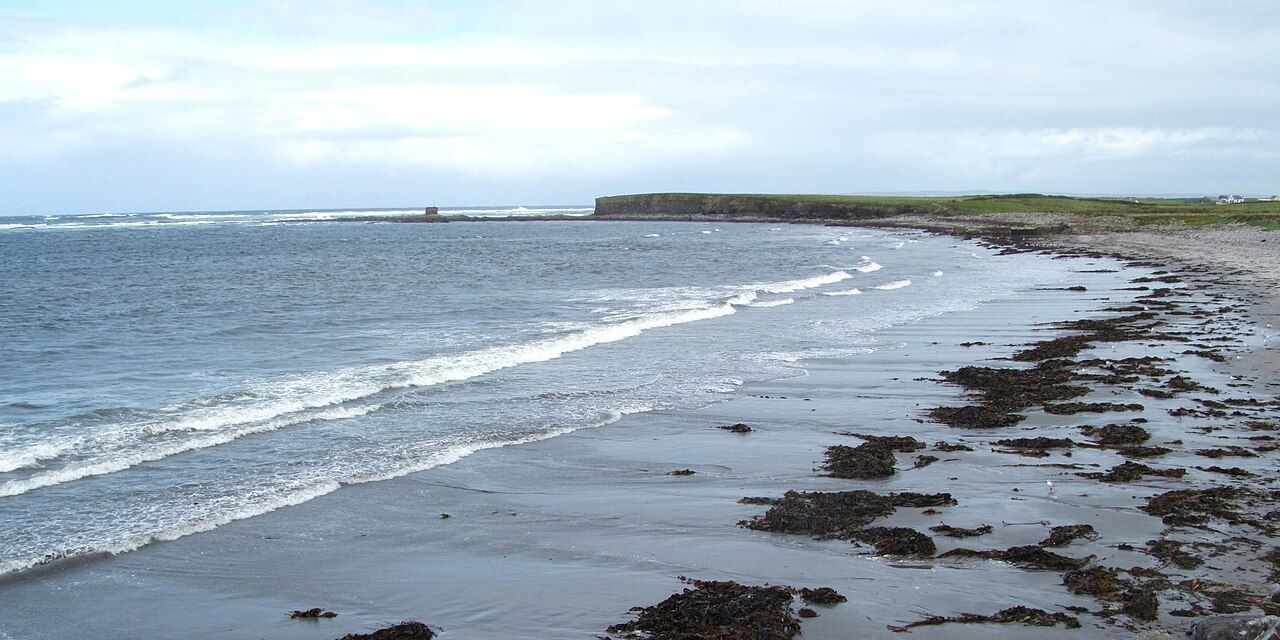
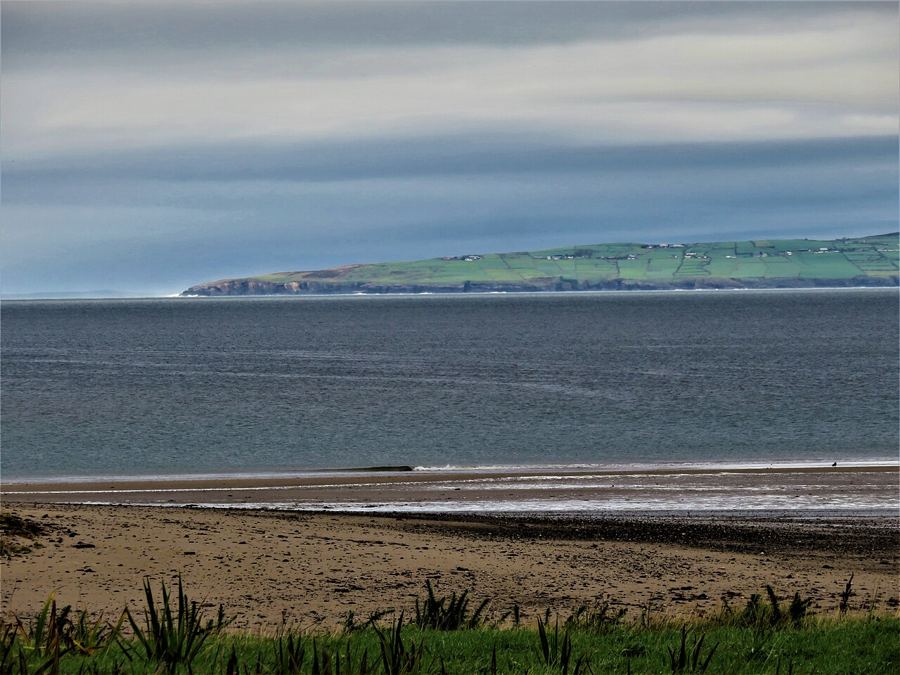
Quilty is easy to ride through without stopping. The main road runs past a church, a few houses and a line of low walls, and then the village is behind you. Stop, though, and turn towards the sea. The shore here is a long, low run of rock, cobbles and dark sand, and out in the bay sits Mutton Island, flat and green, with the Atlantic breaking along its far side.
This is the coast between Doonbeg and its long strand to the south and Spanish Point to the north. It is a working shore more than a resort one, and that is the reason to come.
A village that lives off the shore
Quilty has long been known for seaweed. For generations families along this stretch gathered weed from the rocks and the tideline after storms, and used it to feed the fields, to sell, and in leaner times to burn for kelp. You still see heaps of wrack thrown up on the beach after a blow, and in places the weed is cut and carried away much as it always was.
You do not need to know any of this to enjoy the place, but it changes how you look at the shore. The brown mats on the sand are not mess. They are part of the village's history, washed in fresh each winter.
Mutton Island
Mutton Island lies a short way offshore, low enough that a big swell seems to roll right over it. People lived and farmed there in the past, and the ruins of buildings and old field walls are still out there, though nobody lives on it now. There is no regular boat, and the sound between the island and the shore is not a place to try your luck in a dinghy or on foot at low water.
Old stories say the island was once joined to the mainland and was cut off by a great storm many centuries ago. Others tie it to the early saints of this coast. Treat these as the stories of a place rather than history you can check. What you can see for yourself is how exposed it is: on a wild day the island disappears behind spray, and on a still evening it sits on a flat sea like a raft.
The Armada stories
In the autumn of 1588, ships of the Spanish Armada were driven onto the Clare coast as they tried to sail home around the north and west of Ireland. That much is history. Local tradition holds that one of them came to grief near Mutton Island, and the names along this shore, Spanish Point among them, keep the memory of those wrecks alive.
Which ship, exactly where, and what happened to the men who reached land are questions where history and legend run together. You will hear more than one version along this coast. Enjoy them as legends, and look at the reefs and the surf off the island: it is not hard to see how a battered ship in a westerly gale would never have stood a chance.
 Next stretch of coastWind, weather and the Atlantic
There is a later sea story too. In 1907 a French sailing ship was wrecked off Quilty and local men rowed out in currachs to bring her crew ashore. The village church is often linked to that rescue, and you will hear the story told with pride. Again, enjoy it as the village tells it.
Storm beaches and how to walk them
North and south of the village the shore changes every few hundred metres. In places there are banks of rounded cobbles, piled high by winter storms. In others the rock steps out into the sea in flat, slippery ledges. Between them are short runs of sand, often half-covered in weed.
- Cobble banks shift under your feet. Walk them slowly, and never in cleats.
- Rock ledges are slick with weed and spray. Keep well back from the edge when swell is running; waves here can surge much further than the ones before them.
- Tides matter. Check the tide before you wander far along the shore, so you are not cut off on a ledge as the water comes in.
Lock your bike by the road and go on foot. There is no riding on the beach here worth the sand in your chain.
Riding to and from Quilty
Quilty sits on the N67, the main coast road from Kilkee to Lahinch. It is a real road with real traffic, including lorries and, in summer, coaches heading north. The surface is generally good, but the verge is narrow and the wind has free rein across the flat land behind the beach.
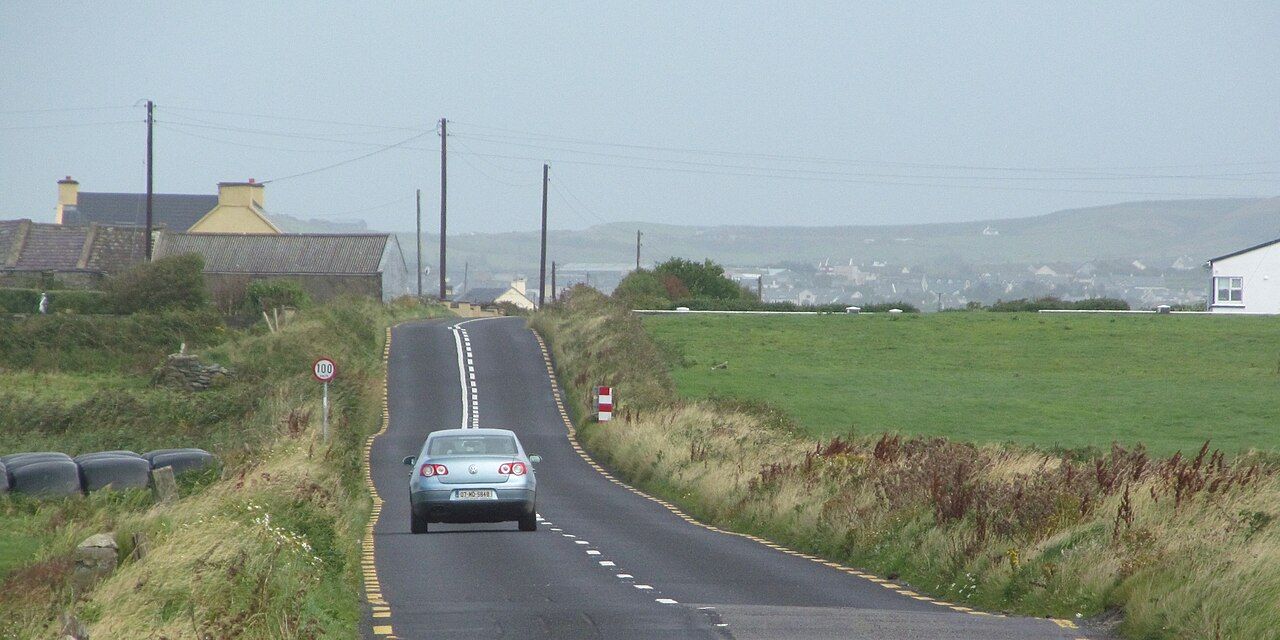
For a gentler ride, look at the small roads inland, which run parallel to the coast for stretches and come back down to the shore at little crossroads. They are slower, with more climbing over low ridges, but far quieter. From Doonbeg, a loop that goes out by the coast and back by the back roads is about 30 km and makes a good half day.
Heading north, it is a short run to Spanish Point and on to Miltown Malbay. Heading south, you pass the long dunes towards Doonbeg. Either way, read the wind before you set off; the notes on riding safely on country roads are worth a look if you are new to roads like these.
When to come
Spring and early summer give long evenings and the best chance of a calm day, when the island lies still and the weed glistens at low tide. Autumn and winter bring the storms that make the storm beaches, and with them a very different, very loud shore. If you come in a gale, watch from the road or from well back on the grass, not from the rocks.
There is little in the way of facilities in the village itself, so carry water and something to eat, and plan your stops in the larger towns on either side.
Quilty rewards a short stop and a slow look. Sit on a wall, watch the sea work at the shore, and let the island and its stories do the rest.
Pictures here: Maoileann, cc-by-sa