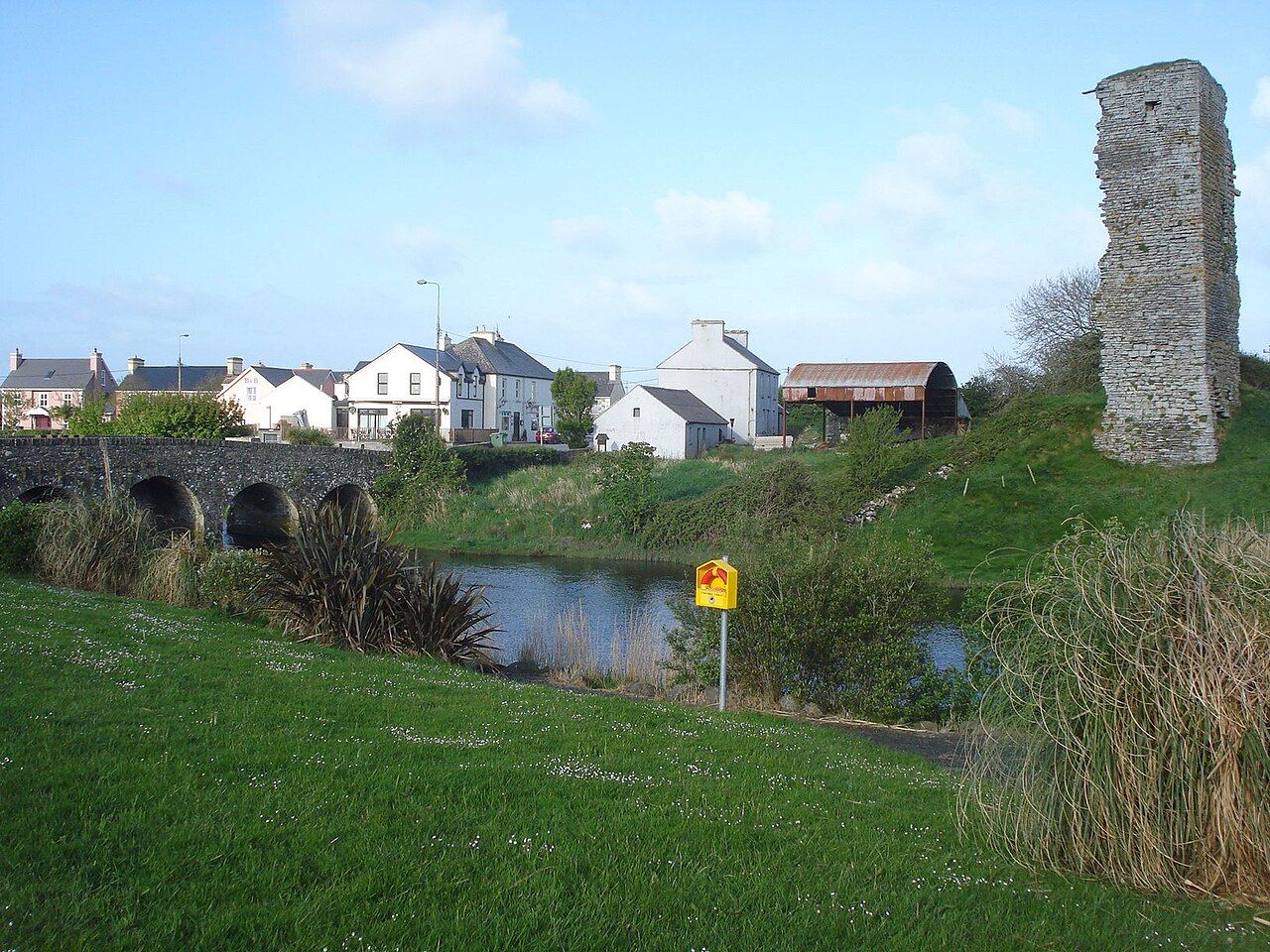
A village on the river
Doonbeg lies on the coast road north of Kilkee, where the Doonbeg river runs out into a bay of the Atlantic. It is a small village of one main street, a church and a scattering of houses, and it marks the start of the long run of beaches and dunes that lines the west Clare coast to the north.
The village grew up at the bridge over the river, and the bridge is still its centre. Stop on it and look downstream: the river widens towards the sea, with mud and sand at low tide and swans and wading birds feeding along the banks.
For riders, Doonbeg is about 12 km from Kilkee, a good stop on a ride north towards Quilty and Spanish Point, or a short outing in its own right.
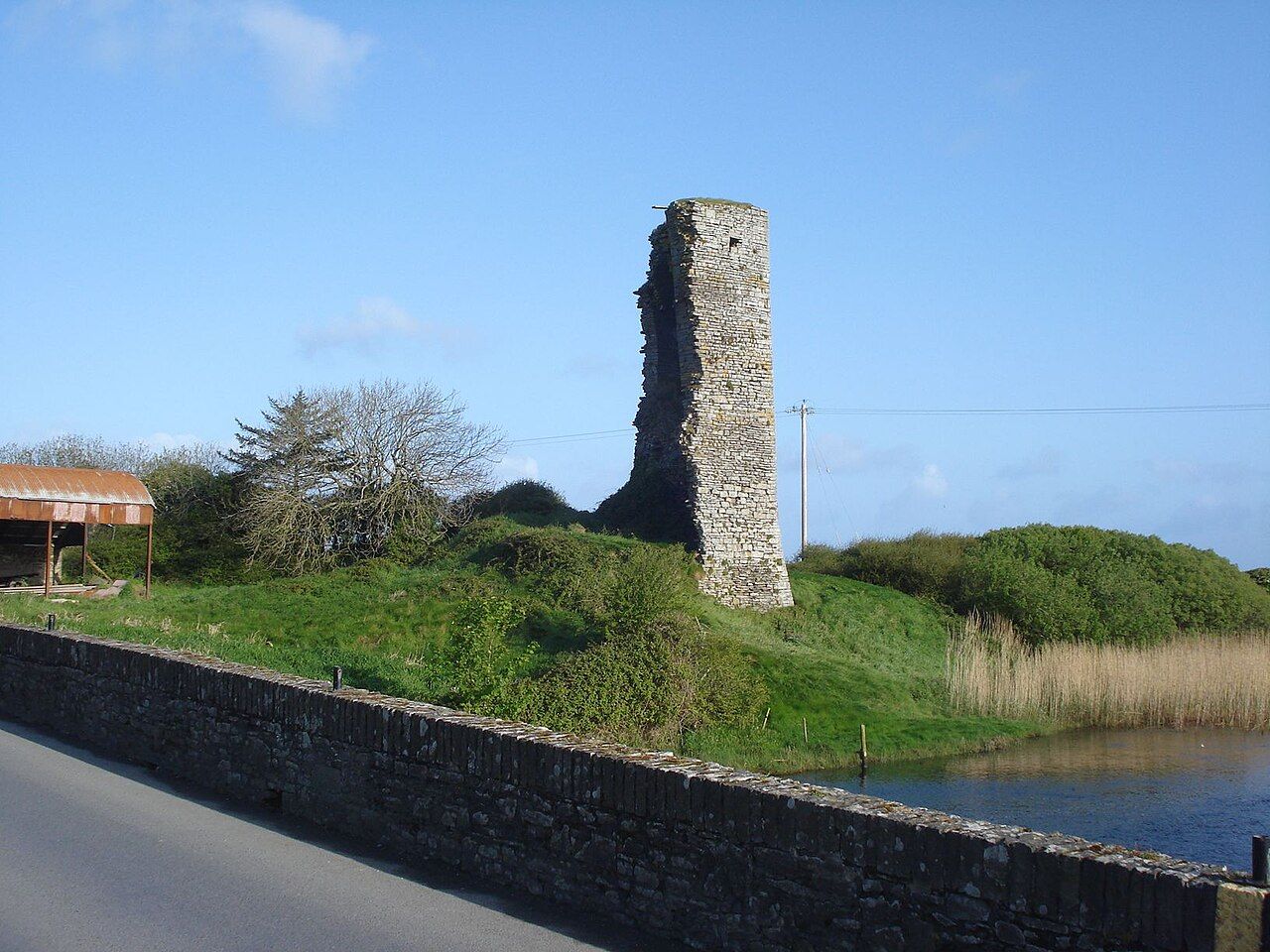
The castle by the bridge
Beside the bridge stand the ruins of Doonbeg Castle, a tower house built in the later Middle Ages to guard the river crossing. Only part of it survives, a tall fragment of wall with traces of windows and rooms, but it still looks out over the river as it has for centuries.
Like many castles in west Clare, it changed hands in the wars of the sixteenth century. The ruin is fragile and may stand on private ground, so view it from the bridge or the road and do not climb on the walls. From the bridge you can take in the castle, the river and the village in one look, and in the evening light the old stonework turns warm and gold.
Small as it is, the castle is a reminder of how much this crossing once mattered. Anyone travelling along the coast had to come through here, and whoever held the tower held the road.
The Armada story
In 1588, as the ships of the Spanish Armada tried to sail home around the north and west of Ireland, storms drove several onto the Clare coast. One of them is said to have been wrecked near the mouth of the Doonbeg river, with many lives lost. Survivors who reached the shore were captured, and the records say they were put to death.
Stories of the wreck have been told here ever since. Some are history, some are legend, and the line between them is often blurred. The coast to the north, at Spanish Point, takes its name from the same events.
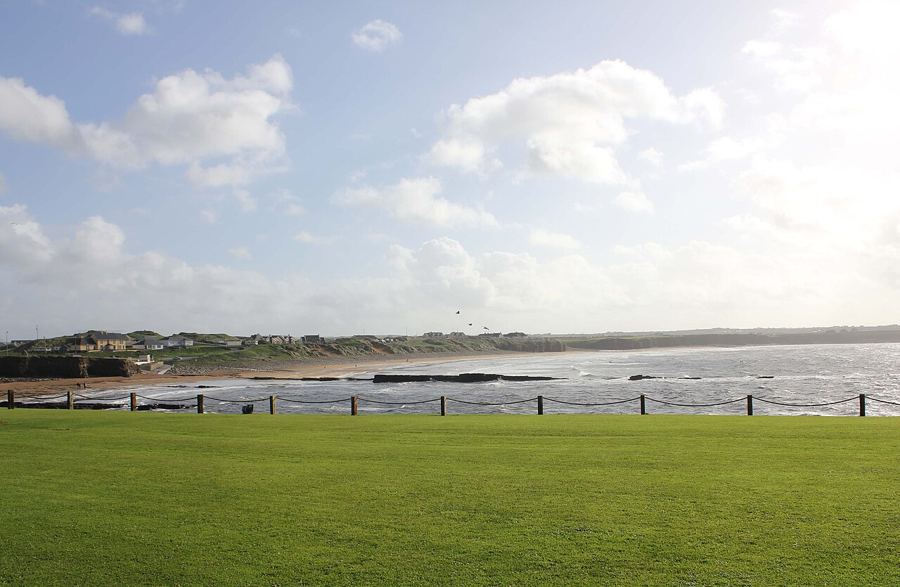 Next stretch of coastSpanish Point and the Armada coast
The White Strand
Close to the village, the White Strand is a sheltered sandy beach with pale sand and clear water. Rocks at each end protect it from the worst of the Atlantic swell, and it is popular for swimming in summer. Lifeguards may cover it in the busy season.
The beach is small and calm compared with the open coast nearby, and it is a good place for a swim or a rest on a warm day. Low tide uncovers rock pools at the edges, and the water is often clear enough to see the sand ripples on the bottom. Off season it is often empty, and you can sit on the rocks at one end with only the gulls for company.
Never swim alone here.
Doughmore and the dunes
North of the village, Doughmore beach is a long, wide strand backed by high sand dunes. It is open to the full force of the Atlantic, and the waves here are big and powerful. Strong currents make it unsafe for swimming most of the time. It is a beach for walking and watching, and for surfers who know what they are doing.
The dunes behind the beach are a protected habitat, home to rare plants and insects, including a tiny, rare snail that lives among the damp dune grasses. Keep to the paths when you cross them, as the sand and plants are easily damaged.
A walk along Doughmore on a windy day, with the surf roaring and the sand blowing, is one of the wildest experiences on this coast.
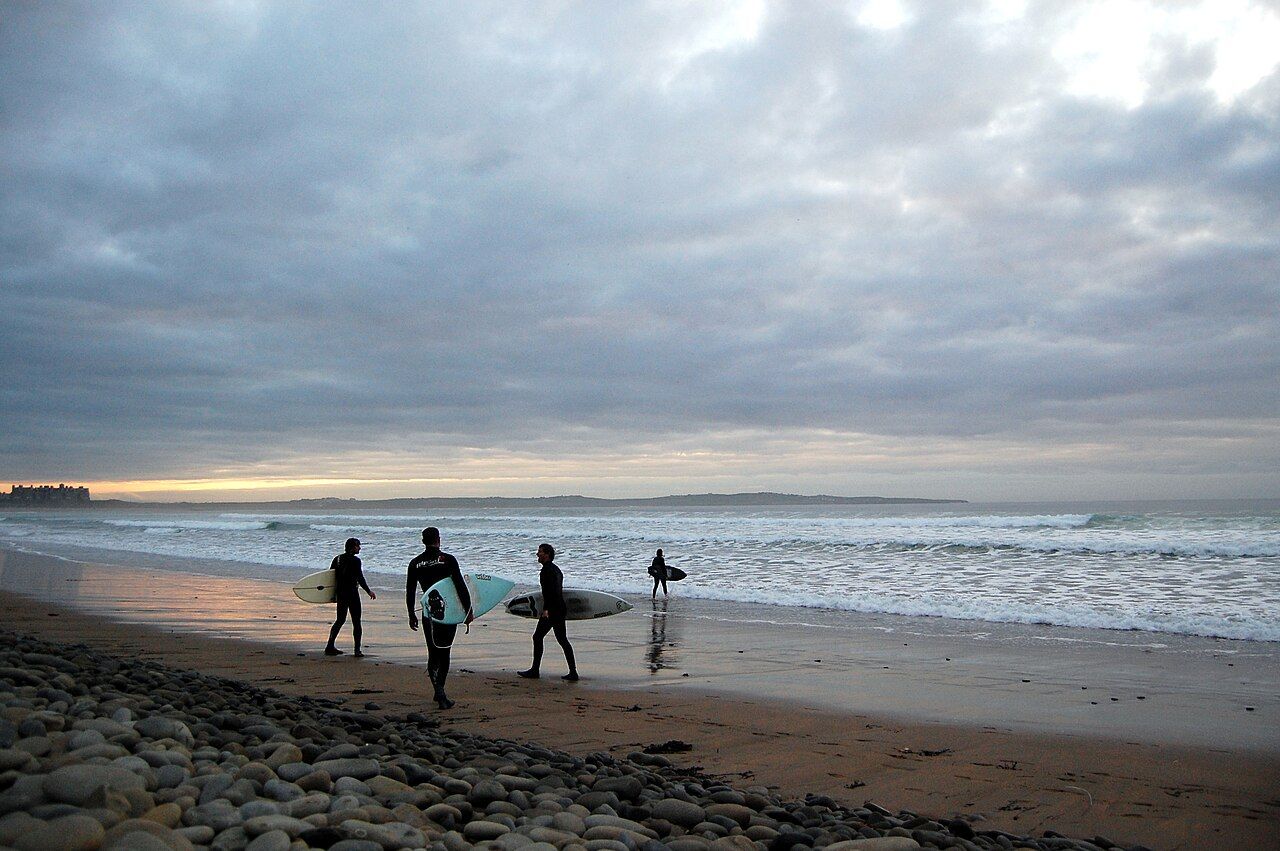
The coast between Kilkee and Quilty
The main road north from Kilkee to Doonbeg and on to Quilty is the N67, which carries steady traffic in summer. It runs a little inland for much of the way, with long open stretches that catch the wind. Where you can, use the quieter side roads closer to the coast, which give better views and fewer cars.
From Kilkee, the ride to Doonbeg is about 12 km. From Doonbeg to Quilty is about 14 km, passing more beaches and small headlands on the way. The land is rolling, with a few short climbs.
- Ride single file on the N67 and use lights in poor visibility.
- Expect a headwind on the way north if the wind is from the north or north-west.
- Carry water and food; villages are small and services seasonal.
Doonbeg is a good place to pause on the way, with the river, the castle and two very different beaches all close together. Take time to see them all before you push on. North of here the coast grows longer and lower, with the strands and storm beaches around Quilty and Spanish Point, and the riding settles into a steady rhythm of headland, bay and village.
Pictures here: Peter Clarke, cc-by-sa